
 Image 1 of 1
73. Maia
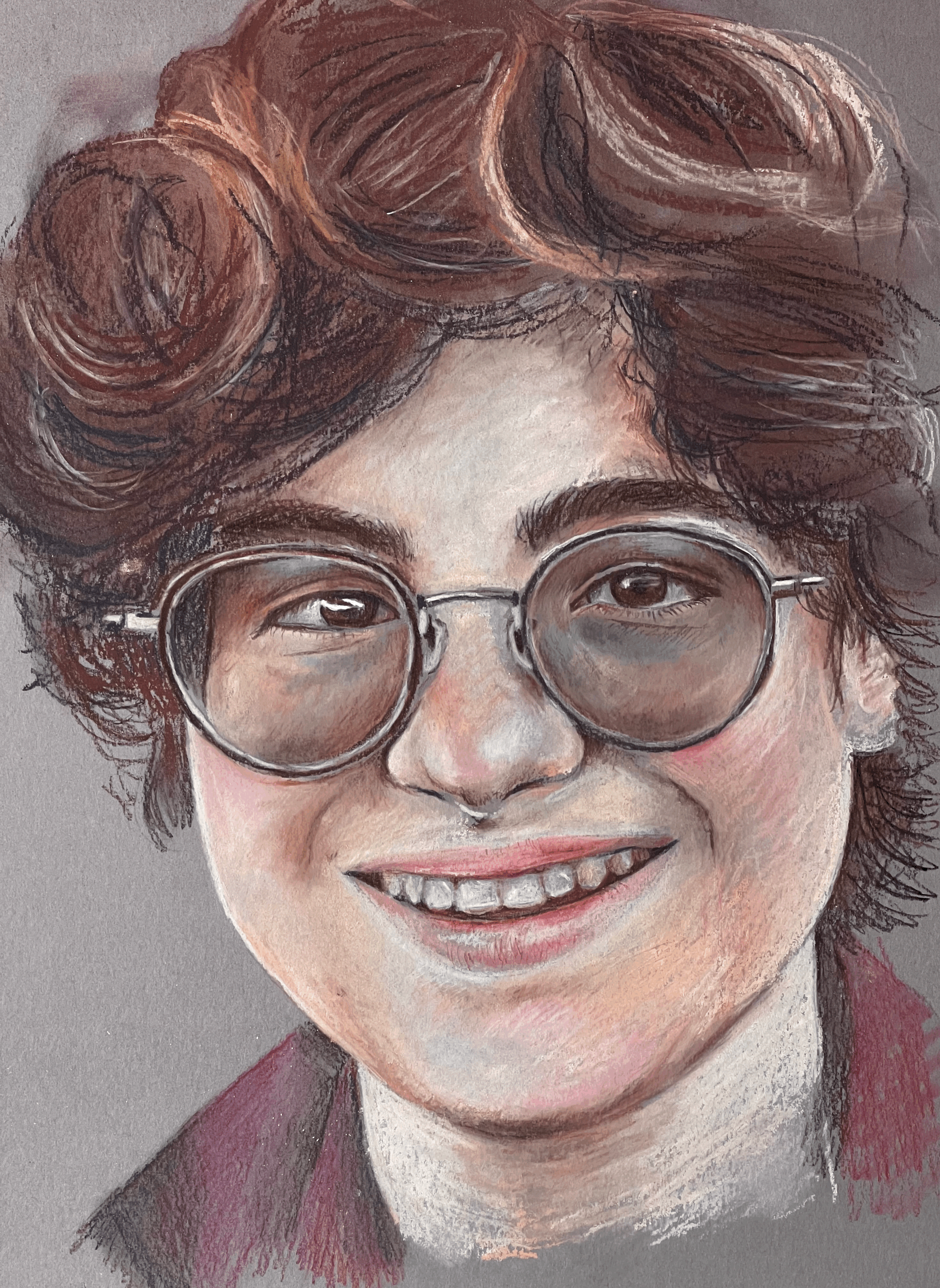
Maia Poet, nearly 27, USA
“For over a decade, from the ages of 12 to 24, I believed I had been born with a male brain in a female body. I pursued gender transition as a teenager because I genuinely thought it was the only way to resolve the intense distress I felt while navigating puberty with an autistic and ADHD brain. At the time, transition was presented to me not as one possible interpretation of my suffering, but as the only explanation. Every new sensory and psychosocial discomfort I experienced in my changing body was then filtered through the framework of gender identity.
Today, I no longer identify as transgender. I stopped my transition and began focusing on my health instead. Over the last year, I’ve lost more than 40 pounds and am approaching my goal weight. As my body has changed, I’ve become increasingly horrified by the damage I caused myself through years of chest binding.
The measures I took as an adolescent to “correct” my supposedly “wrong” body permanently damaged my upper body, both cosmetically and physically. I now live with chronic pain, nerve problems, flared ribs, damaged breast tissue, loss of sensation across my chest, reduced lung capacity, and severe neck and back pain. I am only 27 years old, yet I need a neck brace just to sleep comfortably.
Standing or walking for too long can trigger tingling and numbness down my left arm. Taking a full deep breath is uncomfortable. My ribs ache constantly from years of structural compression. These are not abstract risks to me. They are daily realities that affect how I move, sleep, breathe, and exist in my body.
What disturbs me most is that none of the trans adults guiding me online warned me this could happen.
As a middle schooler in 2011 and 2012, I was repeatedly told that binding was “safe and reversible” as long as I avoided ace bandages and did not bind for “too long.” At first, the recommendation was 10–12 hours a day. Years later, that number would shift to 8 hours. Why? Because these guidelines were never based on long-term evidence. They were improvised as people went along. And those who were harmed by this guidance got blamed for not doing a dangerous practice “carefully enough.” What nobody acknowledged was that compressing a developing chest, rib cage, spine, lungs, muscles, and connective tissue for years at a time is inherently risky, especially for adolescents whose bodies are still growing. Yet the transgender community still overwhelmingly promotes the idea that breast binding is “safe and reversible,” despite the absence of long-term evidence demonstrating this to be true. Parents buy binders for their daughters believing they are harmless compromises. Schools, nonprofits, and gender clinics distribute and encourage the use of these compression devices as though they are no different from ordinary clothing.
But breast binders are not “just clothes.”
They are medical compression devices that place sustained pressure on the chest wall, ribs, skin, muscles, and connective tissue. In medical settings, chest compression is typically temporary and supervised, such as after surgery. Gender-related binding, by contrast, is often done daily for months or years with little medical oversight and no clear endpoint. Shapewear can conceal some of the visible damage I now live with, but it cannot undo what happened underneath. Much of this harm is not reversible.
If adults in trans communities, or even my doctors, had been honest with me about these risks when I was 12 years old, I would not be speaking out today. But because these harms continue to be minimized or denied, more children are being hurt.
It is time to take the physical and medically impactful consequences of long-term breast binding seriously. Not a single long-term study has demonstrated that this practice is safe over years of continuous use, especially for growing adolescents.
Today, I write on Substack about gender questioning, neurodivergence, and (de)transition, helping parents and clinicians better understand how to support vulnerable young people with honesty, nuance, and compassion.”
Find me here:
Maia Poet, nearly 27, USA
“For over a decade, from the ages of 12 to 24, I believed I had been born with a male brain in a female body. I pursued gender transition as a teenager because I genuinely thought it was the only way to resolve the intense distress I felt while navigating puberty with an autistic and ADHD brain. At the time, transition was presented to me not as one possible interpretation of my suffering, but as the only explanation. Every new sensory and psychosocial discomfort I experienced in my changing body was then filtered through the framework of gender identity.
Today, I no longer identify as transgender. I stopped my transition and began focusing on my health instead. Over the last year, I’ve lost more than 40 pounds and am approaching my goal weight. As my body has changed, I’ve become increasingly horrified by the damage I caused myself through years of chest binding.
The measures I took as an adolescent to “correct” my supposedly “wrong” body permanently damaged my upper body, both cosmetically and physically. I now live with chronic pain, nerve problems, flared ribs, damaged breast tissue, loss of sensation across my chest, reduced lung capacity, and severe neck and back pain. I am only 27 years old, yet I need a neck brace just to sleep comfortably.
Standing or walking for too long can trigger tingling and numbness down my left arm. Taking a full deep breath is uncomfortable. My ribs ache constantly from years of structural compression. These are not abstract risks to me. They are daily realities that affect how I move, sleep, breathe, and exist in my body.
What disturbs me most is that none of the trans adults guiding me online warned me this could happen.
As a middle schooler in 2011 and 2012, I was repeatedly told that binding was “safe and reversible” as long as I avoided ace bandages and did not bind for “too long.” At first, the recommendation was 10–12 hours a day. Years later, that number would shift to 8 hours. Why? Because these guidelines were never based on long-term evidence. They were improvised as people went along. And those who were harmed by this guidance got blamed for not doing a dangerous practice “carefully enough.” What nobody acknowledged was that compressing a developing chest, rib cage, spine, lungs, muscles, and connective tissue for years at a time is inherently risky, especially for adolescents whose bodies are still growing. Yet the transgender community still overwhelmingly promotes the idea that breast binding is “safe and reversible,” despite the absence of long-term evidence demonstrating this to be true. Parents buy binders for their daughters believing they are harmless compromises. Schools, nonprofits, and gender clinics distribute and encourage the use of these compression devices as though they are no different from ordinary clothing.
But breast binders are not “just clothes.”
They are medical compression devices that place sustained pressure on the chest wall, ribs, skin, muscles, and connective tissue. In medical settings, chest compression is typically temporary and supervised, such as after surgery. Gender-related binding, by contrast, is often done daily for months or years with little medical oversight and no clear endpoint. Shapewear can conceal some of the visible damage I now live with, but it cannot undo what happened underneath. Much of this harm is not reversible.
If adults in trans communities, or even my doctors, had been honest with me about these risks when I was 12 years old, I would not be speaking out today. But because these harms continue to be minimized or denied, more children are being hurt.
It is time to take the physical and medically impactful consequences of long-term breast binding seriously. Not a single long-term study has demonstrated that this practice is safe over years of continuous use, especially for growing adolescents.
Today, I write on Substack about gender questioning, neurodivergence, and (de)transition, helping parents and clinicians better understand how to support vulnerable young people with honesty, nuance, and compassion.”
Find me here: